Tuesday, 26 April 2022

Looking for a forgotten Second World War German camp site

The winter of 1942 was exceptionally cold in Finland and German Gebirgsjäger needed shelter from the elements when they started arriving in Hanko in January and February that same year. Finding the long lost camp site is crucial for my PhD titled "Deutsches Lager Hanko 1942-1944 - The Modern Conflict Archaeology and History of a Second World War Transition Camp in Hanko S. Finland".

Surprisingly the use of metal detector offered very little information about the location of the camp.

The survey area is wast and today densely forested. All signs of the former "Waldlager" have vanished over the 80+ years sice it was constructed. By using a combination of studies of the terrain, work with maps, GPS and eye witness accounts collecting during the work with my PhD we managed to get on track with finding the site

The search for the lost camp is on.

Work with locating the site will continue on Friday. Tomorrow we are off to the Hanko archipelago where our mission is to "Find the Fallen of the Hanko Front". Stay tuned for an update on this humaitarian forensic work tomorrow evening.

A sign pointing towards the direction of the German camp in January 1942. Photo SA-Kuva archives.


Monday, 25 April 2022

Second World War Battlefield- and Conflict Archaeology of the Hanko Front April 2022

Today we kicked off the 2022 field season by taking a first look at an area were supposedly 12-20 Soviet soldiers were buried (and subsequently forgotten) in 1940-1941.

A forgotten gravesite for KIA Soviet soldiers ?

No signs whatsoever of the low mounds so typical for the Second World War Soviet burial sites in Hanko. Today just the singing of birds in the trees and a cool breeze from the sea on this very peaceful area. We will take a closer look at this area later this week.

Clues to "Finding the Fallen of the Hanko Front"

During the next couple of days we will continue our serach of the Hanko front. Each day will have a different objective and our research will take us to sites on the mainland as well as the archipelago. This time of year safe sea transports are crucial and we greatly appreciate the help from the Finnish Defence Forces "to boldly go" where no conflict archaeologist has gone before. Please follow our research here on a daily basis!

The sea transports will be with Jurmo class landing crafts. Photo Finnish Defence Forces.


Tuesday, 29 March 2022

Explore the stone-age origins of Helsinki this summer

It´s official! Registration for the upcoming archaeology field course  starts on Thursday the 31st of March at 10.00 a.m. (Finnish time). No previous experience of archaeology or archaeological excavations is required and children under 14 years of age can participate in the company of an adult. The excavation is fully booked but you can register on the waiting list.


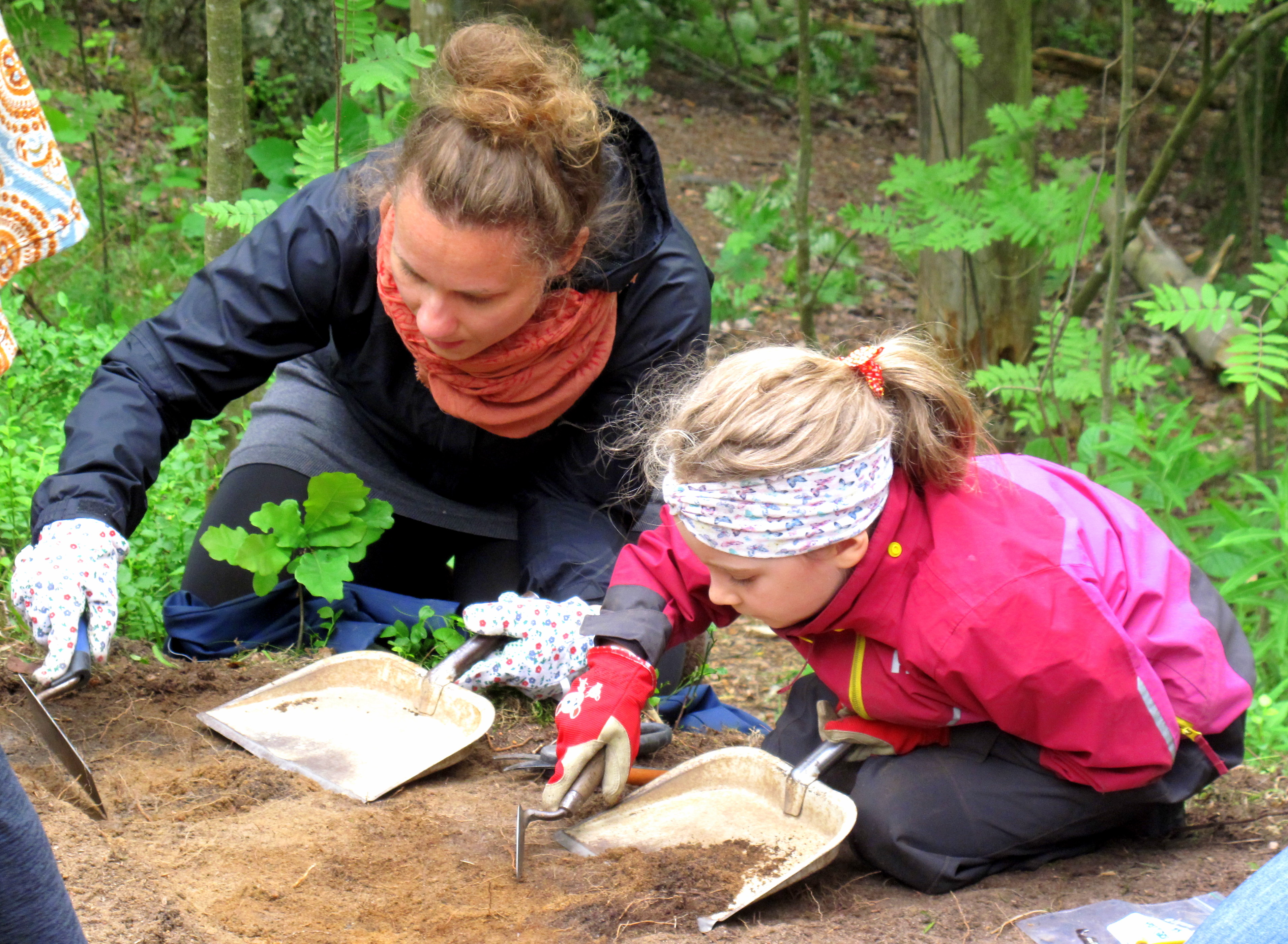
Archaeology for all ages.

The excavation site dates to the neolithic stone-age (3700-3300 BC) and has proven very rich in finds. Typical finds include ornate pottery, flint arrowheads and amber pendants among many other things left behind by the stone-age inhbitants.

Well worn flint dagger and a neolithic potsherd found during excavations of the site in 2018.

The excavation is located only 15 minutes from Helsinki city centre and is easily accessible by train or by bus. The excavation is arranged by Helsinki Summer University. 


Register on the waiting list here!

Saturday, 19 March 2022

"Porkkala 1944-1956" Field Course in the Archaeology of the Cold War

What could be more relevant in these worrying times in Finland than a Community Archaeology field course in the Archaeology of the Cold War in the larger Kirkkonummi region. Registration starts on June 1st 2022.

The Cape of Porkkala has been a central place throughout history. It is also a strategic place as The Gulf of Finland was crossed at the narrowest point here. As early as in the Middle Ages the Danish King Waldemar II Sejr mentioned a place named "Purkal" in his descriptions and in 1944 the naval base of the Soviet Union was named after this strategic place.

The strategic location of the Soviet military base in Porkkala 1944-1956. Photo Degerby Igor.

After September 1944 the Porkkala region was evacuated and became a closed off area to its former residents. After the civilians had been forced to leave a huge Soviet military base was built in the area. Shelters and command posts providing protection in case of nuclear war and two airports were constructed, one for fighters and another for the frontier guard planes. The small town of Kirkkonummi became the centre of the base.  Soviet civilians also moved to the quite selfsufficient region with their own collective farms, shop, school, cinema and hospital. In 1956 the area with its many massive cold war period constructions was returned to Finland.

By the border to the military base in 1956. Photo Porkkalan Parenteesi.

The Cold War Conflict Archaeology project will start with lectures, a tour to the research areas and small scale trial excavations 30.9-2.10.2022. From here the project continues with yearly excavations  and other associated research until 2026. 

Soviet fortified shelter in Porkkala. Photo Retkipaikka.com.

Registration starts on the 1st of June 2022 at Kirkkonummen Kansalaisopisto https://www.kirkkonummi.fi/kansalaisopisto. The maximum number of participants is only 20 so you need to act fast in order to secure your spot. No previous knowledge of archaeology is required. The multidisciplinary research is done in co-operation with Raseborgs Museum and Degerby Igor Museum.


Friday, 18 March 2022

Newly found stone-age clay figurines from the Åland Islands

Sometimes the most intriguing finds are the smallest ones. The miniature clay figurines made by the neolithic stone-age seal hunting population on the Åland islands around 4 000 + years ago offer a journey into the animistic mindset of our stone-age ancestors but also tests the limits of Scientific Archaeology itself.

Picture from the Jettböle excavations. Photo Björn Cederhvarf. 

In the very early 20th century Finnish archaeologist Björn Cederhvarf made a series of excavations of the Jettböle site on Åland and found many strange clay artefacts until then unknown to the archaeological community. Named "Clay Idols" because of their supposed use in rituals the use of these items have been debated ever since. 

Clay Idol from Jettböle. Photo Finna archives.

Sensational new finds of several fragments of these kind of "Idols" from the Ge 16.9 site situated in Geta in the N. part of the Åland islands in July 2021 may finally shed light on the use of these strange and intriguing items. 


Head fragent of a "Jettböle Type" clay figurine found in July 2021 during community archaeology excavations of the Geta 16.9 site. First photo version Marjo Karppanen. 

The Scientific research of the newly discovered figurines has only just started and will be done in co-operation with local archaeologist and PhD researcher MA Jenni Lucenius (University of Turku) . In  2022 and in the years to come more  archaeological excavations will be conducted on the site.  The community archaeology excavations are supervised by PhD resarchers MA Jan Fast and MA Janne Soisalo (University of Helsinki) with funding fom MEDIS (Mariehamns Medborgarinstitut).  

Another clay figurine fragment. Photo Janne Soisalo.

We can not thank the staff of "Ålands Museum" and especially archaeologists Jan Storå and Niklas Stenbäck enough for making our research of the stone-age of the Åland islands possible. A very special thanks goes out to Siv Ekström MEDIS (Mariehamns Medborgarinstitut) who believed in our idea of starting community archaeology excavations on the Åland Islands  

From the Ge 16.9. excavations in 2021. Photo Jan Fast.

Tuesday, 15 February 2022

Large Nordic community archaeology excavation planned for 2022-2023

In the 1997 I led the a Nordic field course in archaeology (NAU 1997) in Salo SW Finland together with the legendary archaeologist Anna-Liisa Hirviluoto and assisted by archaeology students Helena Anttila (R.I.P) and Henrik Jansson. The excavation with participants from all of the Nordic countries was a fantastic experience and left an ever lasting impression on me. Sadly with the untimely death of Anna-Liisa Hirviluoto soon after, the fine tradition with the circulating Nordic community archaeology excavations came to an abrupt end.

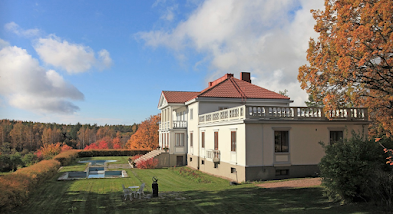
15 years after the wonderful excavation in Salo NAU 2023 is now beeing planned with combined funding from several different sources and in close co-operation with Söderlångvik Manor. The excavation is planned to take place on the fantastic Ölmosviken dwelling site on Kimitoön in SW Finland a site that has provided large amounts of finds from the late neolithic/early bronze age. Sensational finds of unburnt 4 000 year old bones last summer add to the scientific and also popular interest of the site.

Link to the webpage of Söderlångvik Manor

The multidisciplinary excavation will also include pedagogic archaeology with schools that specialize in media- and photographic art education. During the excavation the students will document the excavation and give their personal perspective and a fresh look at both the finds themselves as well as the intriguing world of archaeological fieldwork. The results will be presented in an exhibition and of course on social media during the excavation itself and after it.

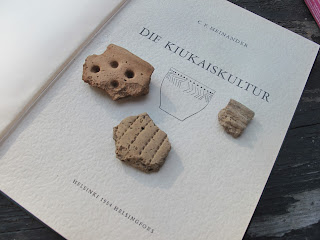
The finds from Ölmosviken belong to the so called "Kiukais" culture. Photo Jan Fast

NAU 2023 will be precidated by a five day long trial excavation lasting from the 22nd to the 26th of August. Please send us an email to jfarchaeology@gmail.com if you wish to participate in this excavaton. There is no participation fee and you don´t need any previous experience of archaeology in order to participate.

Monday, 1 November 2021

JFArchaeology community archaeology excavations on mainland Finland and the Åland islands 2022

Having left the wonderful 2021 excavation season behind us we are now planning new exiting fieldwork for 2022.

Almost all of the planned excavations are within the field of community archaeology which means that you don´t need any previous knowledge of archaeology in order to participate. Children under 14 years of age can join our team in the company of an adult.  The participation fee usually varies depending on the organizer.


April

·     25.04. – 29.04.2022 ”Finding the Fallen of the Hanko Front” in Hanko S. Finland

Privately funded research project with a scientific multidisciplinary research team. No registration, only professionals accepted but you can always send us a letter of interest if this type of humanitarian work interests you as part of your history or archaeology studies or if you have particular expertise or skills that you think might assist us in our work.

The Hanko 1941 project on Facebook


May

·  02.05. – 06.05.2022 and 09.05. – 13.05.2022 Excavation of Soviet general Sergei Kabanovs WW2 underground command post in Hanko S.  Finland.

Privately funded scientific multidisciplinary research and community archaeology excavation with Hangö Sommaruni in combination with pedagogic excavations with local schools (09.05. – 13.05.2022).

Project webpage


·   12.05. – 18.05.2022 Excavation of the Vävarsbacka II neolithic stone-age dwelling site in Porvoo E Uusimaa region.

Community archaeology excavation of a multiperiod stone-age dwelling site with Borgå Medborgarinstitut

The excavation on Facebook


·   21.05. – 22.05.2022 and 04. – 05.06.2022 Excavation of the Kittiskoski E neolithic stone-age dwelling site in Lohja SW Finland.

Community archaeology excavation with Hiiden Opisto. Registration starts on the 20th of April 2022.

The excavation on Facebook


23.05. – 27.05.2022 and 30.05. – 03.06.2022.Pedagogic excavation of the Kittiskoski E neolithic stone-age  (Early - Typical Combe Ceramic Culture and Corded Ware Culture) dwelling site in Lohja SW Finland


Planning in progress with several Finnish and Swedish speaking schools from Lohja. The excavation is fully booked!


June

·  08.06. – 12.06.2022 Excavation of the Kolsarby late neolithic stone-age (Kiukais Culture) dwelling site in Kirkonummi S. Finland.

The excavation on Facebook


·  15.06. – 18.06.2022 and 19.06. – 22.06.2022 Excavation of Jäkärlä stone-age (Jäkärlä Culture) dwelling site in Turku SW Finland. Community archaeology project with Åbo arbetarinsitut.


The excavation on Facebook


· 27.06. – 04.07.2022 Excavation of the Kläppkärr neolithic stone-age dwelling site (Corded Ware Culture and Early Comb Ceramic Culture) in Espoo S. Finland. Community archaeology project with Esbo arbetarinstitut.


The excavation on Facebook


July

·  25.07. 29.07.2022 and 01.08 – 05.08.2022 Excavation of the Ge 16.9 neolithic stone age (Pitted Ware Culture) dwelling site  in Geta on the Åland Islands.


The excavation on Facebook


August

·  10.08. – 14.08.2022 Excavation of the ”Leikkipuisto” stone-age (Typical Comb Ceramic Culture) dwelling site in Pitäjänmäki, Helsinki.


The excavation on Facebook


·  17.08. – 21.08.2022 Excavation of the Ruskiasuo stone-age Early Comb Ceramic Culture and Corded Ware Culture) dwelling site in Kouvola (Elimäki).

The excavation on Facebook


September

·  05.09. – 09.09.2022 and 12.09. – 16.09.2022 Excavation of Soviet general Sergei Kabanovs WW2 underground command post in Hanko S. Finland.

Community archaeology project with Hangö Sommaruni and privately funded scientific research. Planning in progress, please wait for more details!


Project webpage


·      19.09.–22.09.2022 Pedagogic excavation of the Kittiskoski E neolithic stone-age (Early - Typical Combe Ceramic Culture and Corded Ware Culture) dwelling site in Lohja SW Finland with students from Ojamonharjun koulu ja Mäntynummen yhtenäiskoulu.

Planning in progress with the pedagogic teams from both schools.                       

The excavation on Facebook


·  

Wednesday, 26 May 2021

The JFA 2021 field season has started

THIS year we will be excavating mainly stone age and second world war sites. In all 21 separate excavations will be carried out by us between May and October 2021. All of the excavations are community archaeology excavations and six of these include pedagogic archaeology with local schools.


Although most of the excavations are already fully booked there are a few spots left on a couple of the digs. Please contact the arrangers as soon as possible, no previous knowledge of archaeology is required!

Kirkkonummi, Kolsarby 9.6. - 13.6.2021

Excavation of a late neolithic dwelling site. 

Hanko 1941 project 12.7. - 16.7.2021 and 19.7. - 23.7.2021

Battlefield archaeology excavations of the Hanko front
https://hangosommaruni.fi/studieprogram/22-kurser/ovriga-kurser/arkeologi/66-konfliktarkeologi

Lohja Kittiskoski E 4.9. - 19.9.2021

Excavation of a neolithic dwelling site

Saturday, 22 May 2021

The find of a lifetime in Inkoo S. Finland

WORK in a housegarden in Inkoo S. Finland came to an abrupt end when Eija Ström stumbled on an approximately 5000-year old large neolithic flint artefact. The artefact (possibly a knife or an arrow- or spearhead) is some 9 cm:s in length and 3 cm:s at its widest point. The find resembles arrowheads from the so called Typical Comb Ceramic period but is much larger than previous finds in the area.


The beautiful neolithic flint artefact photographed soon after it was found in the housegarden. Photos Eija Ström.

The find spot is situated approximately 30 meters above present day sea level which might indicate that it was lost on dry land a couple of meters above the stone age seashore. Whether or not the find indicates a stone age dwelling site is however still unclear. An inspection of the find site by the experienced archaeologist from Länsi-Uudenmaan Museo is scheduled for next week.


The find spot in the housegarden in Inkoo. Photos Eija Ström.

The raw material is probably of eastern origin although it can´t be ruled out that the artefact is made of Scandinavian flint (archaeologist Mikael Manninen via FB). The nearest flint occurances are situated hundreds of kilometers from the find site. There are two alternative explanations of how flint arrived in Finland during the Neolithic. It was either brought to the area by individuals who could personally get hold of it from natural sources. The other theory is that flint was procured and used by several different individuals and distributed by exchange networks over long periods of time (Hertell & Tallavaara 2011, p. 12).


Video of the find:

https://www.facebook.com/597552675/videos/10157817618107676/


Further reading: 

Esa Hertell & Miikka Tallavaara 2011    High Mobility or Gift Exchange – Early Mesolithic Exotic Chipped Lithics in Southern Finland. In Mesolithic Interfaces. 

In Variability in Lithic Technologies in Eastern Fennoscandia, p. 11-41. Publisher: The Archaeological Society of Finland. Editor: Tuija Rankama.         

http://www.sarks.fi/masf/masf_1/MI_01_Hertell_Tallavaara.pdf                                     


Wednesday, 14 April 2021

JATULI ry järjestää yleisökaivauksen Lappeenrannan Murheistenrannan kivikautisella asuinpaikalla ma 6.9 - ma 13.9.2021.

KAIVAUKSEN tarkoitus on osallistujien tutustuttaminen arkeologiaan ja sen harrastamiseen. Sen tutkimuksellisena tavoitteena on tarkentaa ja varmistaa onko asuinpaikalla sijaitseva rantavalli Vuoksen synnyn aikainen ja varmistaa vallin alta löytyvien saviastianpalojen ajoitus.


Kampakeramiikkaa Murheistenrannan kivikautisella asuinpaikalla. Kuva Matti Hakulinen.

Asuinpaikalla aikaisemmin suoritetuissa kaivauksissa (2009, 2010 ja 2012) alueelta on löydetty runsaasti isokokoisia tyypillisen kampakeramiikan aikaisia saviastioiden palasia. Erikoista on se, että löytöjä on myös Vuoksen syntyä edeltäneen rantavallin alta (joidenkin käsitysten mukaan tyypillinen kampakeramiikka saapui Saimaan rannoille vasta Vuoksen synnyn jälkeen).

Lumi peittää Murheistenrannan kivikautisen suinpaikan.

Kaivausta johtaa arkeologi Leena SalonenTervetuloa kaivamaan Saimaan hiekkarannalle!


Tiedustelut:

Arkeologi Leena Salonen puh. 040 848 0750

Anne Pesu puh. 040 5689 747

Matti Hakulinen puh. 0400 158374

Tuesday, 23 March 2021

The Traces of War near You 2021 - Sodan Jäljet Lähelläsi 2021

The start of the project was delayed because of the Pandemic but today In was finally able to start lecturing about WW2 Conflict and Battlefield Archaeology to school children ages 12 and up.

 
During spring and autumn of 2021 I will lecture about our work on the Second World War battlefronts of the Hanko front to 50 schools in the Usimaa region. The "Sodan Jäljet Lähelläsi" project is financed by Suomen Kulttuurirahasto and the lectures in Finnish, Swedish and English are free of charge to the schools! 


Thursday, 14 January 2021

Community archaeology excavation of a stone-age dwelling site on Åland coming up in 2021

Ever since I was a young archaeology student in 1987 I have dreamed of excavating a stone-age dwelling site on the Åland islands. Now one is scheduled for July 26th throuh July 30th 2021!

Picture from the excavations of the stone-age dwelling site at Jettböle in 1911. The excavation revealed many well preserved human remains. Photo Björn Cederhvarf

The whole idea of conducting a community archaeology excavation on the islands started in the autumn of 2019 when me and my colleague Janne Soisalo visted Åland and met with local archaeologists Jenni Lucenius and Niklas Stenbäck for a couple of days. Janne is currently working on his PhD about the late neolithic "Kiukais culture" and in this aspect the finds from the Åland islands are very interesting indeed. During our visit both Jenni and Niklas were extremely friendly and showed us around the exiting stone-age dwelling sites especially in the areas around Jomala and Långbergsöda .

Three archaeologists visiting the Långbergsöda stone-age dwelling site area in the rain (left to right Niklas Stenbäck, Janne Soisalo and Jan Fast).

In the autumn of 2020 i contacted the local adult education centre MEDIS (to ask them if the would be interested in organizing a community archeology field course in archaeology on the islands in 2021. The answer was an overwhelming yes! After some very good communication with Jenni the date for the excavation was set to 26-30.7.2021 and the maximum number of participants per day to 20. Children under 14 years of age are allowed to participate but only if accompanied by an adult.

Late neolithic pitted Ware rimsherd from Åland. Photo Jan Fast.

Yesterday Jenni informed me that registration for the excavation had started and today I learned that the excavation already had 16 participants in all. What a success!! Now Jenni has started looking for a suitable place for us to excavate and we hope we will find one during the upcoming month. It is important that the excavation will be located in a scientifically interesting location worthy of publication. We also wish that the excavation can help protect the site in the future.

Archaeologist Jenni Lucenius is working on finding the best spot possible for the upcoming community archaeology excavation

Needless to say both me and Janne are very exited but also very humble to have been granted this unique opportunity to conduct archaeological excavations on the beautiful Åland islands. Let´s hope this will only be the beginning of community archaeology here. Please follow our research on FB by clicking on the link below.