Act now and secure a spot by clicking on the link below. We speak Finnish, Swedish and English. No previous knowledge of archaeological fieldwork is required and children under 14 years of age can participate in the company of an adult.
Sunday, 26 January 2020
URGENT! The stone-age excavation in Espoo. Only 9 spots left!
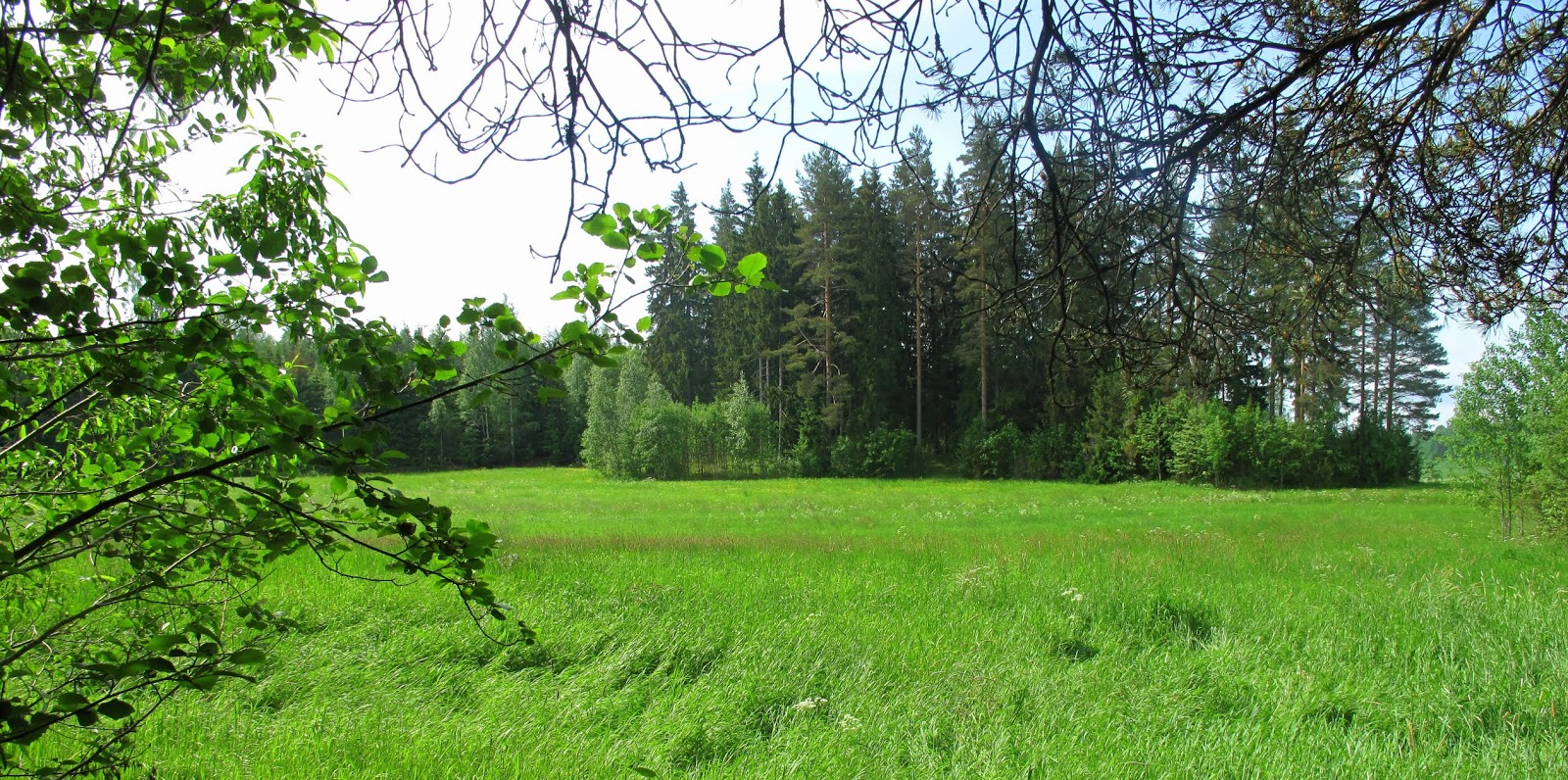
The exciting excavation of the 6000 year old stone-age dwelling site is scheduled for 22.06.2020 - 27.06.2020. The site is very rich in finds from the early comb ceramic and corded ware culture.
Act now and secure a spot by clicking on the link below. We speak Finnish, Swedish and English. No previous knowledge of archaeological fieldwork is required and children under 14 years of age can participate in the company of an adult.
Wednesday, 22 January 2020
"Buried with care" a new exhibition at the Museum and Science Centre Luuppi
The interesting
exhibition, “Buried with care” brings to life the human stories behind the graves under the floorboards and inside the churches of Northern Finland from the 13th to the 19th century.
The coffin
of a newborn child from the Keminmaa old church. Photo T. Kallio-Seppä.
The
exhibition is based on recent archaeological excavations (1990-2010) in Oulu,
Hailuoto, Ii, Tornio and Keminmaa.
Researchers under the floorboards of Haukiputaa church. Photo S. Lipkin.
The exhibition is the third one in a series
of exhibitions on the same theme. The two previous exhibitions where “Rungius,
buried in a church” and “Anna, buried in a church”.
A flower
made out of silk has been put in the hand of a deceased newborn child. Haukiputaa
church. Photo S. Lipkin
Pearls from
a childs grave. Hailuoto old church. Photo S. Lipkin
The
exhibition promises to apply to all senses. It also includes a
virtual exhibit where the visitor can travel to the church of Keminmaa and
familiarize him (or herself) with the mummy of chaplain Rungius and examine the
deceases that computed
tomography scanning of his mummified body has revealed.
A cross
shaped pendant was found in a womans grave during the excavations of the site
of the medieval church of Ii in Hamina.
The
exhibition is based on interdisciplinary scientific work at the University of
Oulu and has been funded by the Emil Aaltonen Foundation and the Academy of
Finland. The exhibition is produced in co-operation with archaeologists at the
University of Oulu, Pohjois-Pohjanmaa museum, Tornionlaakso museum and Kemi
historical museum.
Read more
here:
Saturday, 11 January 2020
From Hanko to Pechenga
I´m currently in the process of writing a feature "WW2 Conflict Archaeology of the
Nordfront" for "Iron Cross Magazine".
Over 60
million people perished in the Second World War and in this almost
unapprehensive scale, the German losses and the events of the war on the
northern front may seem tiny. Set against this backdrop the events that
occurred in Lappland or the small seaside town of Hanko S. Finland, between
1942 and 1944 appear almost microscopic.
SS Kriegsberichters in Hanko 1941. Photo SA-kuva.
And still,
the continuous stream of German soldiers heading for the battles of the
“Eismeerfront” through Hanko and Finland between 1942 and 1944 is a reminder of
the all engulfing power of a world war.
Photos of German soldiers who died on the in Finland during WW2 and a decaying German barrack in Hanko. Photo Japo Knuutila.
These
forgotten battlefields, long lost camps and decaying artefacts in the soil,
tell thousands of different and personal stories about war. The words of the German soldiers in their
letters and diaries, photographs and documents, the slowly decaying barracks as
well as the common and mundane artefacts in the soil, all bear witness of the
helplessness that ordinary human beings felt and experienced amongst the
crushing and devastating historical events of a world war.
"Iron
Cross is the UK’s only magazine focusing entirely on German military history
from 1914 to 1945. It launched with great success in June 2019 and is available
worldwide in both print and digital formats.
Iron Cross
puts the German military under the microscope; looking at organisations and
tactics, as well as at materiel, technology, politics and the more personal and
human elements of the German serviceman’s experience.
The content
covers the land, sea and air war across all periods of both wars and is written
by a team of international experts and historians. To a more limited extent, it
covers the inter-war period in Germany between 1919 and 1939."
Sunday, 5 January 2020
Bradshaw Foundation - Ancient Rock Paintings in Finland and Scandinavia!
"Ismo
Luukkonen is a photographer living and working in Turku, Finland. For twenty
years he has specialized on photographing rock art and other prehistoric sites,
mainly in Finland and Scandinavia."
Part of the Värikallio rock painting in Hossa. Photo Ismo Luukkonen.
"In his work the documentary approach to ancient images and landscapes is joined
with thoughts on time, momentariness and eternity. Ismo Luukkonen also works as
a senior lecturer of photography in the Arts Academy at the Turku University of
Applied Sciences."
Links and more to Ismos amazing work here!
Saturday, 4 January 2020
Registration to the 2020 excavation in Elimäki starts in three days!!
Kouvolan Kansalaisopisto has announced that the registration for the 2020 excavation in Elimäki starts on January 7th at 9.30 am! There are 16 spots available for the excavation that runs from June 16th to June 18th 2020 so please act fast if you wish to paticipate!
The excavation was fully booked on January 7th 2020.
This year we will continue the research of the Ruskiasuo stone-age dwelling site. The aim is to gain as much data as possible about this intriguing site to help preserve it for future generations. Last year the finds from the site showed that it had been inhabited both during the early comb ceramic and the corded ware culture period.
No previous experience of archaeology is needed in order to participate in the excavation. Children under 14 years of age can participate in the company of an adult.
Click here next Tuesday if you wish to register!
The excavation was fully booked on January 7th 2020.
Early comb ceramic rimsherd from the 2019 trial excavation of the site. Photo Jan Fast.
This year we will continue the research of the Ruskiasuo stone-age dwelling site. The aim is to gain as much data as possible about this intriguing site to help preserve it for future generations. Last year the finds from the site showed that it had been inhabited both during the early comb ceramic and the corded ware culture period.
The stone-age dwelling site of Kouvola (Elimäki) Ruskiasuo. Photo Jan Fast.
No previous experience of archaeology is needed in order to participate in the excavation. Children under 14 years of age can participate in the company of an adult.
Click here next Tuesday if you wish to register!
Friday, 3 January 2020
Registration for this years excavation in Porvoo has started!!!
The registration for this years community archaeology excavation in Porvoo has started. This years excavation will be the largest this beautiful neolithic stone age dwelling site so far! Update 3.1.23:20 hrs. THE EXCAVATION IS FULLY BOOKED.
The excavation will run from the 3rd of June to June 7th 2020. It is possible to participate for one or several days. No previous knowledge of archaeology or archaeological fieldwork is required. Children under 14 years of age can participate in the company of an adult.
Register here and secure jour spot at the excavation in June!
Picture from the excavations in 2019. Photo Jan Fast.
Comb ceramic potsherd. Photo Jan Fast
Register here and secure jour spot at the excavation in June!
Saturday, 28 December 2019
2020 community archaeology dig @ Vantaa Jokiniemi confirmed
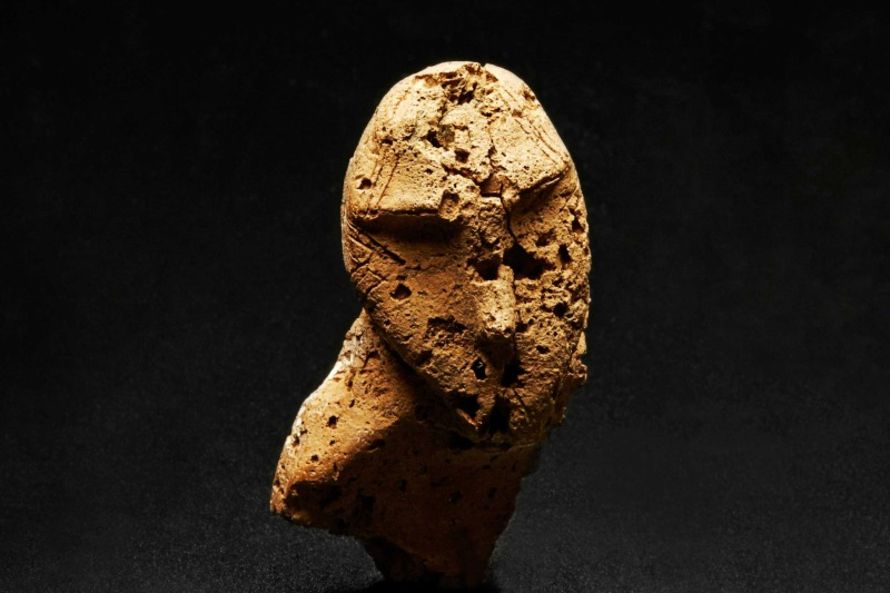
The antropomorphic clay figurine "Tuima" was found in 1989.
In 1989 an
amateur archaeologist found an astonishing anthropomorphic 5500 year old clay
figurine in Vantaa Jokiniemi. He decided to keep it secret. The find was finally reported 26 years later, and in 2015 the fragile figurine was handed over to the National Heritage Agency. Despite the importance of the find no archaeological field work has been conducted of the find site.
Heureka, the Finnish Science Centre has been conducting community archaeology excavations on the Jokiniemi site 1990-1994 and 2014-2015.
This will
change in July 2020 when Helsinki Summer University and Heureka join forces and
arrange a community archaeology trial excavation of the findsite. The excavation will make use of state of the art measuring and other equipment in order to better understand the site as a whole and help protecting it in the future.
I´m
currently in the finishing stage of a 20 page scientific article about the clay
figurines found during previous excavations in Jokiniemi. The results from the
2020 excavations will be included in this article scheduled for publication in
December 2020.
8.7-12.7.2020 Vantaa Jokiniemi
Trial excavation of the find site of the anthropomorphic clay figurine "Tuima".
Helsingin seudun kesäyliopisto/Heureka.
Registration starts soon https://www.kesayliopistohki.fi/en/
Pre registration and letters of interest jfarchaeology@gmail.com
Helsingin seudun kesäyliopisto/Heureka.
Registration starts soon https://www.kesayliopistohki.fi/en/
Pre registration and letters of interest jfarchaeology@gmail.com
Hanko 1941 new updates on the website
I added some more stuff to the Hanko 1941 webpage. Remember to check in on a regular basis.
I hope to have information on next years battlefield archaeology field school soon. If you wish to participate you can send a letter of interest already!
Excavating the German WW2 transition camp with Hangö Sommaruni conflict archaeology field school in Hanko 2019.
I hope to have information on next years battlefield archaeology field school soon. If you wish to participate you can send a letter of interest already!
Friday, 27 December 2019
Follow the conflict archaeology project "Hanko 1941" on Internet
I have
started work on a web page about the "Hanko 1941" project. Hanko 1941
is a scientific WW2 conflict archaeology project (2018 -2025) that surveys,
documents and excavates remains and battlefield locations from 1941 in Hanko S.
Finland.
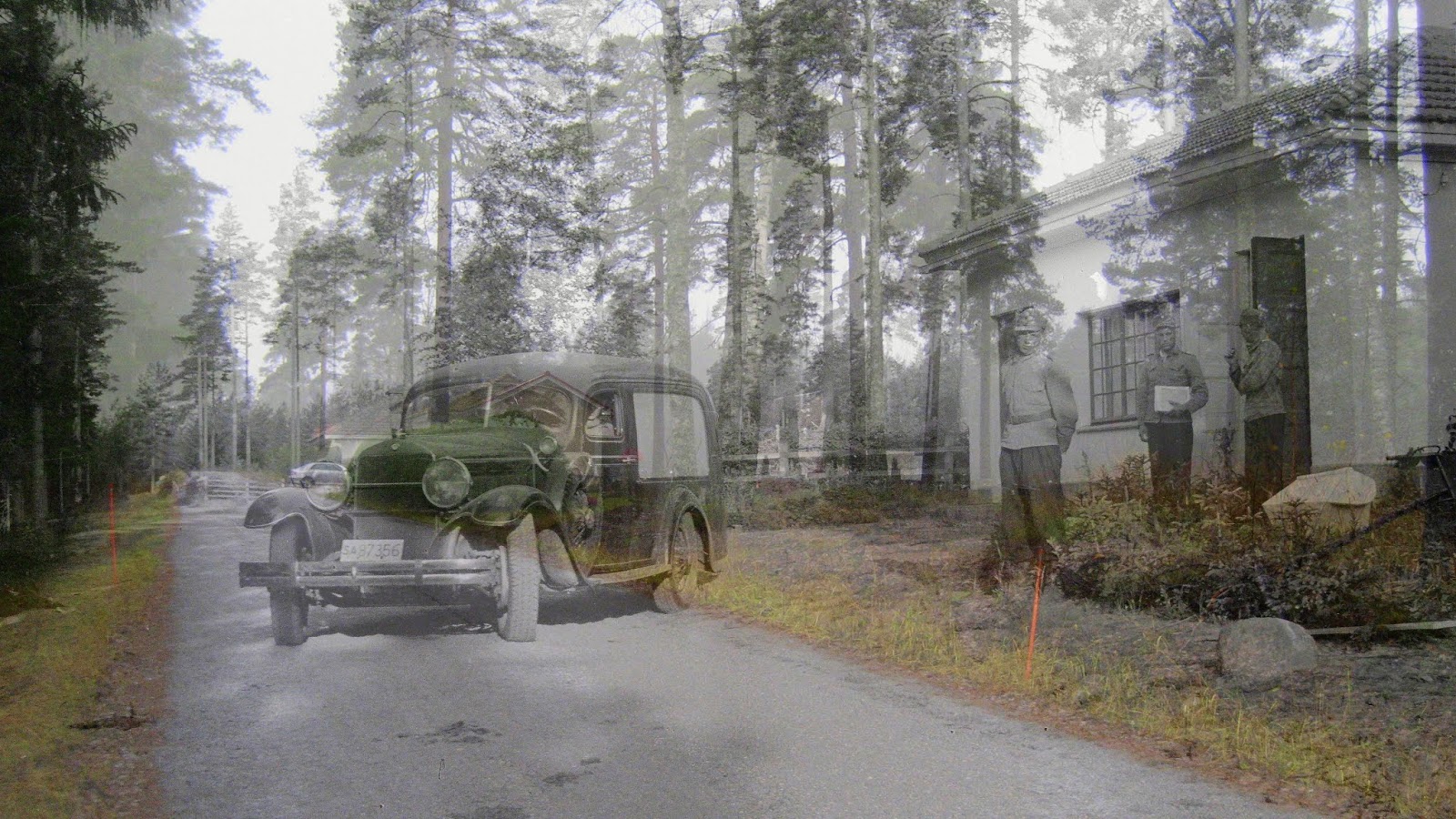
Finnish soldier on the Hanko Front in the summer of 1941. Photo Bertel Nordenstreng
We work in
close association with Sotavainajien Muiston Vaalimisyhdistys r.y. The Russian
Embassy in Finland, Hangö Sommaruni, Hanko Museum and Hanko Front Museum. We report
our research results to the National Heritage Agency on a regular basis.
Although it is still under construction you can check it out by clicking on the link below.
Tuesday, 3 December 2019
JFArchaeology for schools in 2020
Visiting schools to speak about my work as an archaeologist has been a big part of my work since my days at Heureka the Finnish Science Centre in the 1990´s. Today in 2019 and almost 30 years later I feel that communicating scientific archaeology to schoolchildren is as important as it was back then.
I started doing excavations with schoolchildren first in Raseborg in the early 1990´s and later after 2000 in other towns in Southern Finland as well. There is no better place to teach students about their origins and history than an archaeological excavation. Make no mistake, the young participants know how to dig too!
In 2019 me and my colleague Janne Soisalo, together with Sagalundsgillet rf. organized the biggest excavation with schoolchildren ages 10-12 so far and with some 100 kids participating! The excavation was carried out on the exiting late neolithic dwelling site of Ölmosviken on the island of Kimitoön in SW Finland. The excavation at Ölmosviken will continue in May 2020 once again with funding from The Finnish Cultural Foundation. In 2020 the excavation will reach out to schoolchildren ages 13 and up.
In May we will make another school project, this one in Tampere were the students will investigate the history of the Annisto homestead. This project combines photographic art (Juha Suonpää), history and pedagogy (Marja-Leena Korte-Suonpää), archaeology and responsible metal detecting (Lasse Nyman) to touch all senses and create a unique learning by doing (and feeling) experience.
In the spring of 2020 I will once again tour schools in the larger Helsinki area to speak about archaeology and my work on prehistoric and Second World War sites. Looking forward to it!
Pedagogic archaeology in 1990-1994 with Heureka The Finnish Science Centre. Photo Heureka.
Archaeology with schools in SW Finland 1992-2020. Photo Västra Nyland.
In 2019 me and my colleague Janne Soisalo, together with Sagalundsgillet rf. organized the biggest excavation with schoolchildren ages 10-12 so far and with some 100 kids participating! The excavation was carried out on the exiting late neolithic dwelling site of Ölmosviken on the island of Kimitoön in SW Finland. The excavation at Ölmosviken will continue in May 2020 once again with funding from The Finnish Cultural Foundation. In 2020 the excavation will reach out to schoolchildren ages 13 and up.
Pedagogic archaeology at Ölmosviken 2018-2020. Photo Jan Fast.
In May we will make another school project, this one in Tampere were the students will investigate the history of the Annisto homestead. This project combines photographic art (Juha Suonpää), history and pedagogy (Marja-Leena Korte-Suonpää), archaeology and responsible metal detecting (Lasse Nyman) to touch all senses and create a unique learning by doing (and feeling) experience.
Archaelogy and history for all senses at Annisto. Photo Marja-Leena Korte-Suonpää.
In the spring of 2020 I will once again tour schools in the larger Helsinki area to speak about archaeology and my work on prehistoric and Second World War sites. Looking forward to it!
Friday, 22 November 2019
Updated!!! JFA community archaeology excavations in 2020!
Join us in exploring the stone-age and WW2 next field season. Please send a letter of interest to us if you wish to participate (jfarchaeology@gmail.com).
We also welcome foreign archaeology students especially if you have an interest in the neolithic or WW2 Conflict- or Battlefield Archaeology!
Best,
MA Jan Fast and MA Janne Soisalo
2020
6.5-8.5.2020 Tampere, Vuores
”Vuores ja kadonneen aarteen metsästäjät” Pedagogic and photographic art related archaeology project around the historic "Annisto" homestead with Vuoreksen koulu.
Fully booked!
Rescue excavation of an early comb ceramic dwelling site.
Karis Hembygdsförening with financial support från Svenska Kulturfonden.
Registration starts soon.
goran.fagerstedt@gmail.com
25.5 and 30.5.-31.5.2020 Kemiönsaari, Ölmosviken
Community archaeology excavation of a late neolithic "Kiukais culture" dwelling site. No admission fee! Registraton has begun, there are still a few spots left!
jfarchaeology@gmail.com.
Karis Hembygdsförening with financial support från Svenska Kulturfonden.
Registration starts soon.
goran.fagerstedt@gmail.com
25.5 and 30.5.-31.5.2020 Kemiönsaari, Ölmosviken
Community archaeology excavation of a late neolithic "Kiukais culture" dwelling site. No admission fee! Registraton has begun, there are still a few spots left!
jfarchaeology@gmail.com.
26.5-29.5.2020 Mullankaivajat Kemiönsaari, Ölmosviken
Pedagogic excavation of a late neolithic, Kiukais culture dwelling site, with local schools.
Sagalundsgillet r.f. with funding from Suomen Kulttuurirahasto
Pedagogic excavation of a late neolithic, Kiukais culture dwelling site, with local schools.
Sagalundsgillet r.f. with funding from Suomen Kulttuurirahasto
Excavation of a stone-age dwelling site. The excavation is arranged by Borgå Medborgarinstitut.
Fully booked!
Fully booked!
Excavation of a neolithic stone-age dwelling site. The excavation is arranged by Kirkkonummen Kansalaisopisto.
Fully booked!
Fully booked!
16-18.6.2020 Kouvola, Ruskiasuo
Excavation of an early comb ceramic and corded ware culture dwelling site. The excavation is arranged by Kouvolan Kansalaisopisto.
Fully booked!
Fully booked!
22.6-27.6.2020 Espoo, Kläppkärr
Excavation of an early comb ceramic and corded ware culture dwelling site.
The excavation is arranged by Esbo Arbetarinstitut. Only a few spots left!!
https://ilmonet.fi/#fi/search/txt=Sten%25C3%25A5ldersmysterier
The excavation is arranged by Esbo Arbetarinstitut. Only a few spots left!!
https://ilmonet.fi/#fi/search/txt=Sten%25C3%25A5ldersmysterier
8.7-12.7.2020 Vantaa Jokiniemi
Trial excavation of the find site of the anthropomorphic clay figurine "Tuima".
The excavation is arranged by Helsingin seudun kesäyliopisto and Heureka.
Registration starts very soon!
Pre registration and letters of interest jfarchaeology@gmail.com
The excavation is arranged by Helsingin seudun kesäyliopisto and Heureka.
Registration starts very soon!
Pre registration and letters of interest jfarchaeology@gmail.com
13.7-17.7.2020 "Hanko 1941" (period 1)
WW2 battlefield archaeology of the Hanko front in the vicinity of Hanko Front Museum.
Register now at Hangö Sommaruni https://hangosommaruni.fi/studieprogram/22-ovriga-kurser/arkeologi/66-konfliktarkeologi
20.7-24.7.2020 "Hanko 1941" (period 2)
WW2 battlefield archaeology of the Hanko front in the vicinity of Hanko Front Museum.
Register now at Hangö Sommaruni https://hangosommaruni.fi/studieprogram/22-ovriga-kurser/arkeologi/66-konfliktarkeologi
31.8-4.9.2020 "Hanko 1941" (period 3)
WW2 battlefield archaeology of the Hanko front. WW2 battlefield archaeology of the Hanko front. Register now at Hangö Sommaruni https://hangosommaruni.fi/studieprogram/22-ovriga-kurser/arkeologi/66-konfliktarkeologi
Community archaeology excavation of a neolithic stone-age dwelling site. Planning in progress. Registration starts in the spring of 2020
Hiiden Opisto https://www.hiidenopisto.fi/
Tuesday, 8 October 2019
Have you ever found a stone-age artefact? Show it here!
After
seeing stone-age finds beeing presented on a variety of Facebook pages I
decided that it could be of general interest to start a separate page for
these. So here it is, let´s see what you have found!
Tuesday, 1 October 2019
The scientific repatriation of seven KIA (1941) Soviet soldiers in Tvärminne, Hanko S. Finland
The excavation of the long lost grave site took place in May and September 2019 and was part of the larger scientific WW2 conflict archaeology project called "Hanko 1941". The work was carried out in close co-operation with The Russian Embassy in Finland, "Sotavainajien muiston vaalimisyhdistys ry", Hanko Front Museum and Hanko Museum (the town of Hanko).
16 persons in all took part in the work, each with clearly defined different tasks ranging from documentation to excavation and forensic dentistry. All work was done as humanitarian (non paid) work.
All work was conducted in strict accordance with rules and regulations concerning the repatriation of fallen soldiers. We also documented and analysed the remains and took care of the conservation of the excavation finds. The Russian Embassy of Finland has promised to take care of the continued forensic examination of the soldiers remains and to try to find relatives to the deceased. The Embassy will also take care of the reburial which will take place in a near future.
MA Jan Fast and Aleksi Rikkinen will lecture on the scientific work in Tvärminne and the "Hanko 1941" project during the conflict archaeology weekend at Hanko Front Museum 19th to 20th of October. Please notice that preregistration to the Hanko Front Museumis mandatory if you wish to participate in the lectures!
Items (a pencil inserted into a Nagant cartridge and a 20 Kopek coin from 1941) from Grave I after conservation. Photo Jarno Huusko (Metropolia) for the "Hanko 1941" project
16 persons in all took part in the work, each with clearly defined different tasks ranging from documentation to excavation and forensic dentistry. All work was done as humanitarian (non paid) work.
Locals had cared for Soviet mass grave in the Hanko archipelago (Sommaröar) for decades after the war but today the site lays forgotten (right). Photo Jan Fast 1981.
In all a total of seven soldiers were repatriated using meticuous excavation and documentation methods. The excavation work proved that sientific archaeology has a significant role to play when collecting data about both burial practises as well as material remains and soil samples from the graves. All of these are of importance in gaining data about the circumstances around the death of the individuals as well as in the identification and general understanding of the relationship between the battlefield and the graves.
Entrenchments and camp grounds in Tvärminne. Map by Aleksi Rikkinen for the "Hanko 1941" project.
All work was conducted in strict accordance with rules and regulations concerning the repatriation of fallen soldiers. We also documented and analysed the remains and took care of the conservation of the excavation finds. The Russian Embassy of Finland has promised to take care of the continued forensic examination of the soldiers remains and to try to find relatives to the deceased. The Embassy will also take care of the reburial which will take place in a near future.
The partly reconstructed grave site photographed soon after the end of the excavation. Photo Börje Österberg.
Monday, 30 September 2019
Before the Bronze-Age. Excavating the Kiukais Culture Dwelling Site at Ölmosviken
The end of the 2019 excavation season is closing in but the weather allowed for one more excavation of the magnificient late neolithic Ölmosviken site @ Kimitoön SW Finland.
Autumn @ Ölmosviken. Photo Marjo Karppanen.
Lots of interesting pottery, C14 and soil samples were again carefully collected by our topexcavation team. These will be of key importance for the work with the dissertation about this time period (work 2019-2023 by MA Janne Soisalo).
Late neolithic Kiukais culture potsherds from Ölmosviken. Photo Jan Fast, Janne Soisalo and Kim Björklund.
The burnt bones were almost totally lacking in excavation area one where the find material predominantly consisted of large Kiukais culture potsherds. On excavation area two however the bone finds were numerous in the thick and intensely coloured cultural layer.
Burnt seal bone fragments etc. from excavation area two.
The lithic material mostly consisted of quartz, quartsite and porfyrite flakes and small items shaped from these raw materials. A large stone-axe was also found during the excavation of area one.
Quartz and Porfyrite scrapers from Ölmosviken. Photo Janne Soisalo.
Neolithic stone axe. Photo Janne Soisalo.
Subscribe to:
Posts (Atom)